Bathroom Renovations Hobart

What to Check Before Renovating the Bathroom in an Older Glenorchy or Montrose Home

Own an older Glenorchy or Montrose home? Check for possible asbestos, original shower waterproofing and Council plumbing approvals before you renovate.

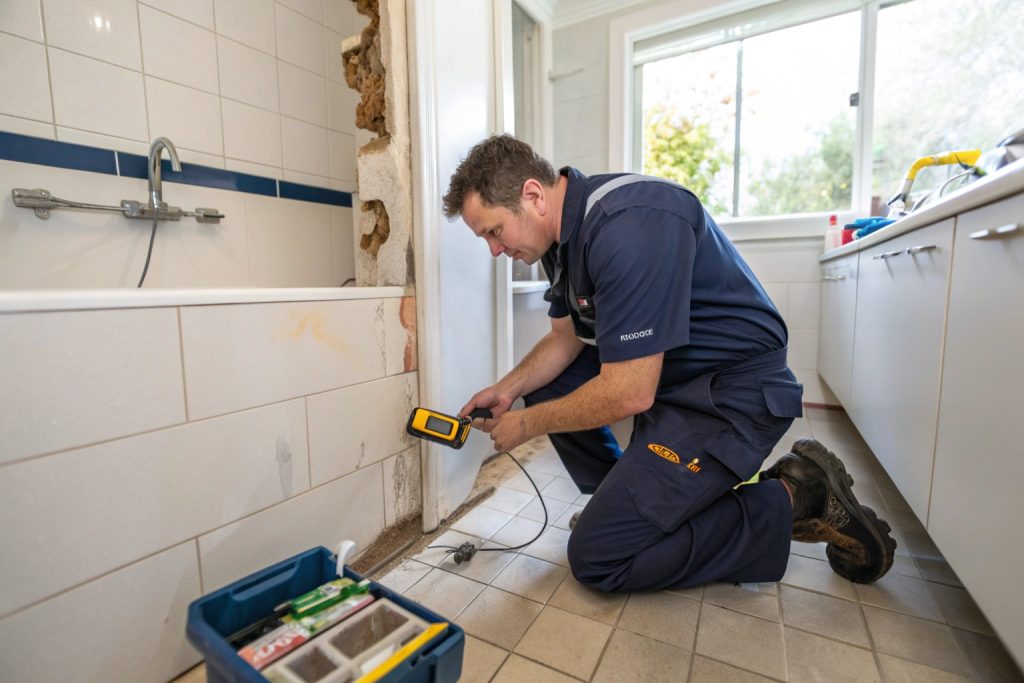
Tradesperson using a moisture meter beside a bath in a tiled bathroom

By Daniel Whitfield · October 21, 2026 · 10:00 am

If you own an older home in Glenorchy or Montrose, you may be thinking about replacing the original bathroom. Before anything comes off the wall, it helps to know what could be sitting behind the tiles.

Glenorchy grew after the war through government housing projects and private building. If your home dates from that time or the years that followed, its age can affect which checks come first. The same questions apply if your home is in Montrose.

When you're renovating a bathroom in an older home, a few questions are worth answering before you plan or budget. This guide covers three checks:

  • whether your bathroom could contain asbestos, and where it can be taken locally for disposal
  • why the waterproofing in an original shower can't be taken for granted
  • whether Glenorchy City Council plumbing approvals apply if you want to change the layout

We finish with how these checks shape your renovation plan, so you can go into the project with a realistic idea of scope.

In this guide:

  1. What to check before renovating an older bathroom: the short version
  2. Why the age of your Glenorchy or Montrose home matters
  3. Check 1: Could your bathroom contain asbestos?
  4. Check 2: Original showers and pre-1989 waterproofing
  5. Check 3: Moving the toilet, shower or drainage? Glenorchy City Council plumbing approvals
  6. How these checks shape your renovation plan
What to check before renovating an older bathroom: the short version

Before you renovate the bathroom in an older Glenorchy or Montrose home, check these three things.

  1. Possible asbestos. WorkSafe Tasmania says homes built before the mid-1980s are highly likely to contain some asbestos. Homes built from the mid-1980s to 1990 are likely to, and homes built after 1990 are unlikely to. A survey is recommended before work starts. Bathroom wall and ceiling panels, vinyl floor tiles and wall-tile backing are listed as common locations.
  2. Original waterproofing. The first Australian wet-area waterproofing standard was published as AS 3740-1989. In a bathroom built before then, standardised waterproofing can't be assumed.
  3. Council plumbing category. Plumbing work in Glenorchy is low-risk (no approval needed), medium-risk (Certificate of Likely Compliance) or high-risk (Plumbing Permit as well). Council or a licensed plumber can help you work out which applies.

Why the age of your Glenorchy or Montrose home matters

After the war, Glenorchy saw large government housing projects alongside private home building. Its population grew, including many European migrants. Across Tasmania, the Housing Department was set up in 1953. Facing post-war housing shortages, it built whole suburbs through broad-acre development.

Montrose sits within the City of Glenorchy too, so the checks in this guide apply there as well.

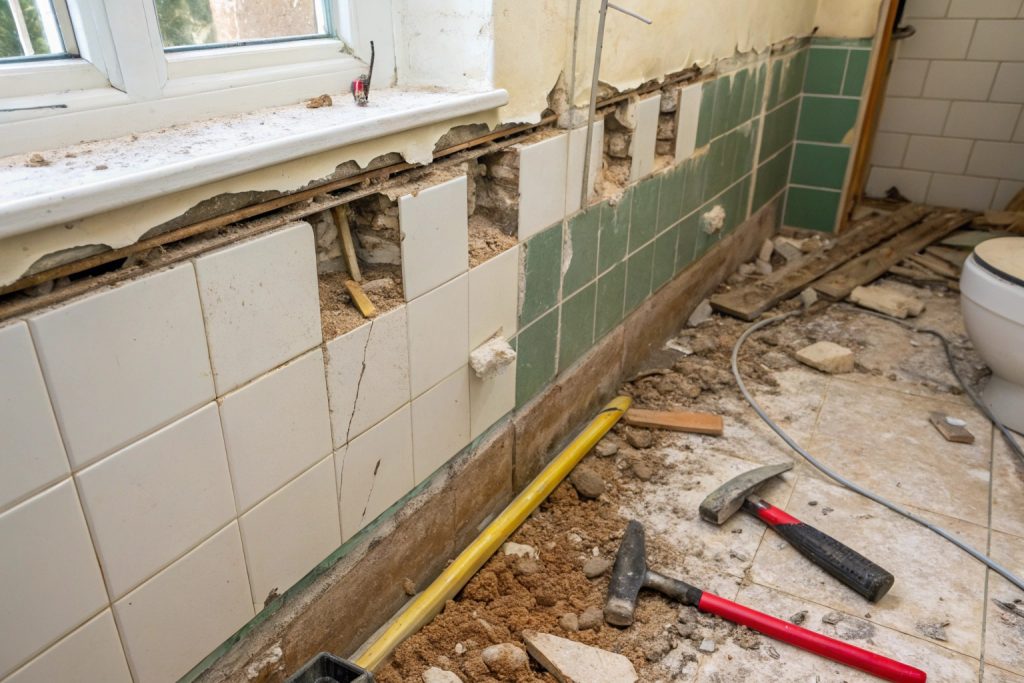
Older bathroom wall with tiles partly removed and tools on the floor

The age of your house gives you a starting point. WorkSafe Tasmania uses build era to describe how likely a home is to contain asbestos. Build era also tells you whether your bathroom was put in before the first Australian wet-area waterproofing standard. If you're thinking about a bathroom renovation in Glenorchy with a local team, knowing roughly when your home was built is a good place to begin.

Check 1: Could your bathroom contain asbestos?

The first check is whether your bathroom could contain asbestos. WorkSafe Tasmania's asbestos guidance for homes links a home's build era to how likely it is to contain asbestos products.

When the home was built WorkSafe Tasmania likelihood
Before the mid-1980s Highly likely to contain some asbestos products
Mid-1980s to 1990 Likely to contain some asbestos products
After 1990 Unlikely to contain asbestos products

This table shows likelihood only. The materials in your own bathroom can't be known without a survey. WorkSafe Tasmania recommends a survey before you start work, so that asbestos-containing material isn't disturbed.

In wet areas, government guidance lists these as common asbestos locations:

  • bathroom wall and ceiling panels
  • vinyl floor tiles
  • the backing behind wall tiles

Local asbestos disposal in Glenorchy

Jackson Street Waste Management Centre in Glenorchy accepts residential and commercial asbestos. Check the centre's current arrangements before any asbestos is taken there.

If a survey is on your list, you can learn more about what asbestos testing and removal involves.

Check 2: Original showers and pre-1989 waterproofing

The second check is the shower. Australia's wet-area waterproofing standard was first published as AS 3740-1989. Later editions followed in 1994 and 2004.

Key date: Australia's first wet-area waterproofing standard was published in 1989.

Bathrooms built during Glenorchy's post-war housing growth were put in before this standard existed. If your shower is original and dates from before 1989, you can't assume its waterproofing was built to a standard.

That doesn't mean the shower is failing. It means the original waterproofing may need assessing as part of your renovation scope, rather than being taken for granted.

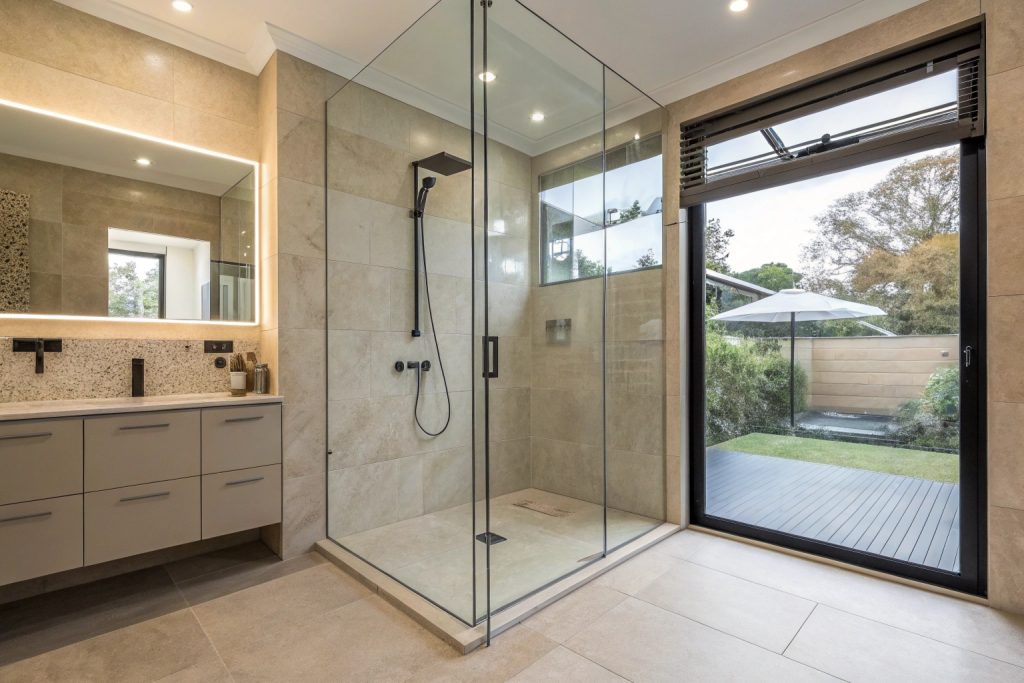
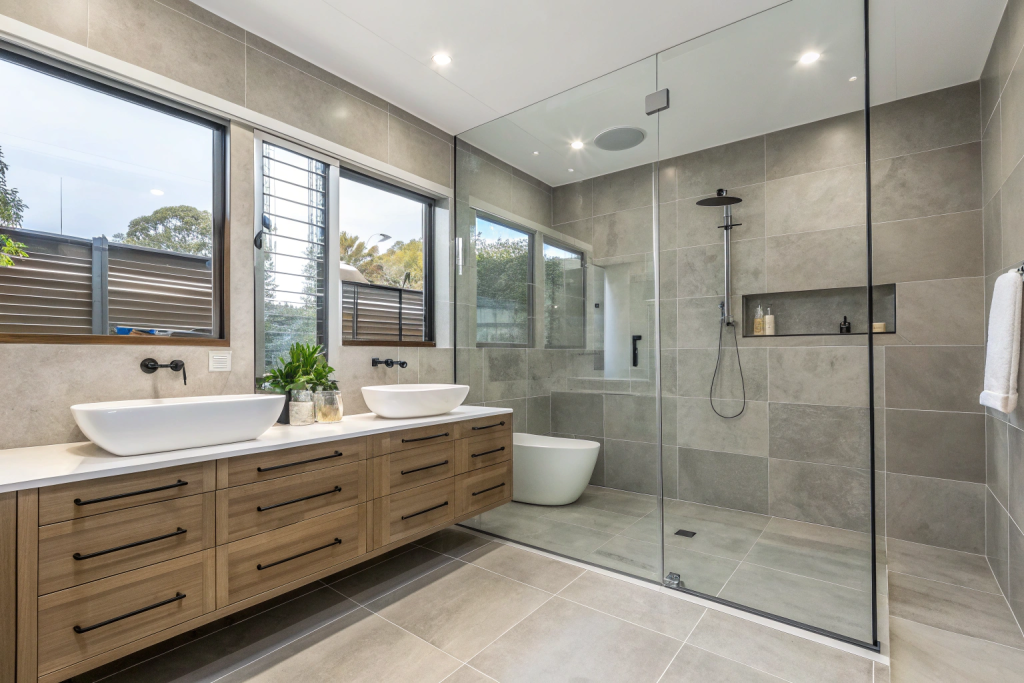
Finished bathroom with a frameless glass walk-in shower and a double vanity

If you'd like to know more, you can read about our shower and wet-area waterproofing work.

Check 3: Moving the toilet, shower or drainage? Glenorchy City Council plumbing approvals

If you want to change the layout of your bathroom, the third check is whether the plumbing work needs Council approval. Glenorchy City Council is the plumbing permit authority for both Glenorchy and Montrose.

Council sorts plumbing work into three risk categories:

Category What's needed
Low-risk No approval needed
Medium-risk Certificate of Likely Compliance
High-risk Certificate of Likely Compliance and a Plumbing Permit

Which category your work falls into depends on the work itself. Council or a licensed plumber can help you work out the category and whether a permit is required. You can also read Council's guidance on whether plumbing work needs a permit.

Plumber working on a toilet in a tiled bathroom

Timeframes: Council gives indicative timeframes of 14 days for notifiable work and 28 days for permit work.

How these checks shape your renovation plan
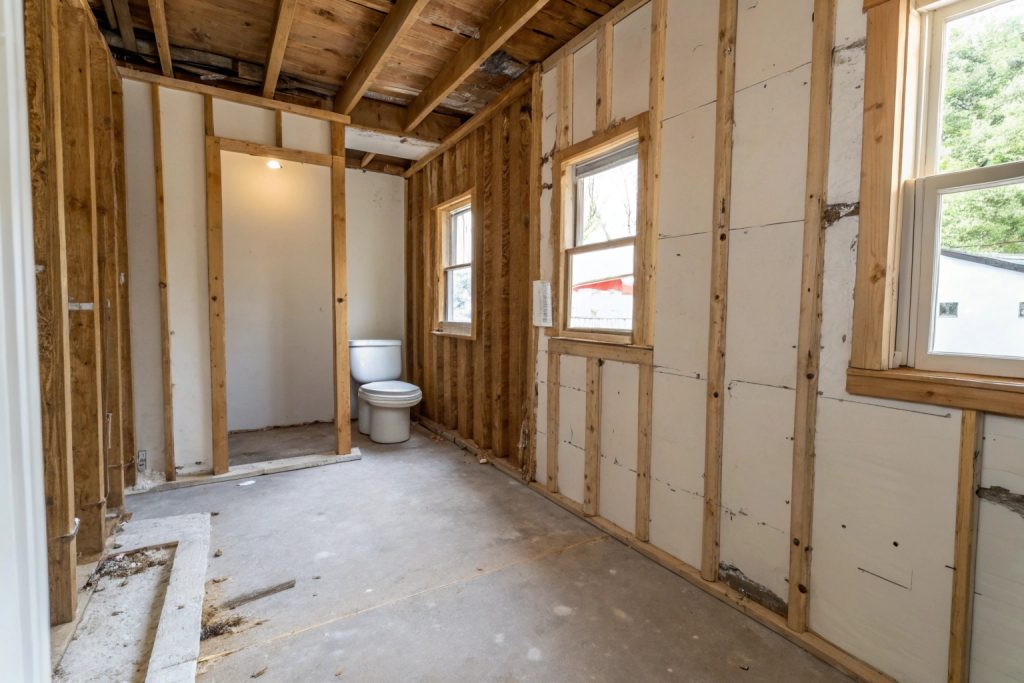
Bathroom stripped back to the timber frame during a renovation

Each check affects what happens first and what your renovation scope includes. Before you lock in a plan, run through this list:

  • Survey before demolition. Arrange an asbestos survey before any tiles, panels or flooring come out.
  • Shower waterproofing. If the shower is original, allow for its waterproofing to be assessed as part of the scope.
  • Council timeframes. If you're moving fixtures, allow for Council's indicative timeframes of 14 days for notifiable work or 28 days for permit work.
Walk-in shower with a frameless glass screen

These checks sit alongside the usual planning decisions. For those, see the broader planning steps in our planning guide.

Once you've worked through the checks for your older Glenorchy or Montrose home, you can talk to our local team about your bathroom in Glenorchy.

Get in touch

GET A FREE QUOTE TODAY

Facebook · Twitter · LinkedIn · Pinterest

Need help? Call our support team 24/7 at (03) 6152 6136

(03) 6152 6136