Bathroom Renovations Hobart

Do I Need Heritage Approval to Renovate My Bathroom? A Guide for Inner-City Hobart Homes

Find out how your inner-city Hobart home is listed, how to check, and what the Heritage Register, local listings and precincts mean for your bathroom.

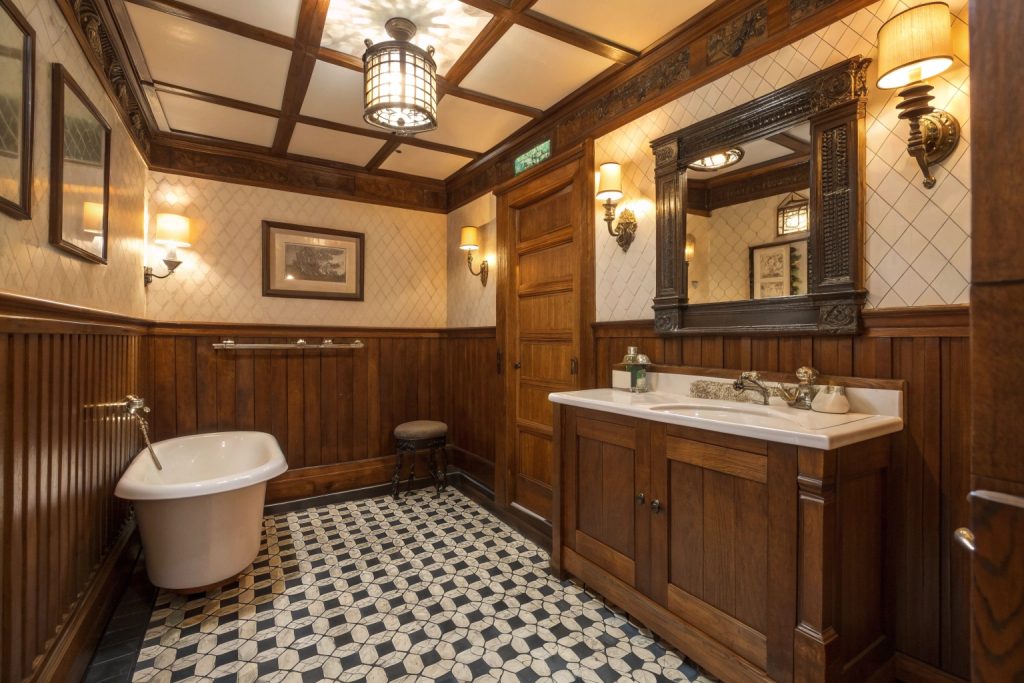
Victorian-style bathroom with period fixtures and traditional tiles

By Daniel Whitfield · October 21, 2026 · 10:00 am

You own an older home close to the city. The bathroom is tired, and you're ready for a new one. Then a question stops you: does "heritage" mean you need permission first?

It's a fair question. You may have heard mixed things about approvals for work inside the house. It can be hard to know what applies to you.

The Hobart CBD, Glebe, southern North Hobart and lower West Hobart have many nineteenth-century and conjoined homes. Some of them are on the Tasmanian Heritage Register. But your suburb alone won't tell you whether your home is listed. The answer depends on your own property.

So, do I need heritage approval to renovate my bathroom? This guide helps you work that out. You'll learn the three listing situations a home can fall into, how to check which one is yours, and what each means for a bathroom renovation. You'll also learn who gives the final answer for your property: the City of Hobart or Heritage Tasmania.

We start with the quick answer. Then we cover why this question comes up so often here, the three listing situations, how to check your status, the pathways for registered homes, local listings and precincts, other approvals, and planning your scope.

In this guide:

Do you need heritage approval to renovate a bathroom in inner-city Hobart?

It depends on how your property is listed.

  • On the Tasmanian Heritage Register: Work inside the house, including bathroom work, may still need heritage approval under the Historic Cultural Heritage Act 1995. This is either a minor works approval or a permit. Doing work on a registered place without heritage approval is an offence.
  • Locally listed or in a heritage precinct: Under the Tasmanian Planning Scheme, internal building and works are exempt from planning permits. The City of Hobart also says planning approval is usually needed for development on these properties, so get advice specific to your home.
  • Neither: The heritage approvals in this guide don't apply, and internal works are exempt from planning permits. Other approvals may still apply.

Confirm your situation with the City of Hobart or Heritage Tasmania before you plan.

Why this question comes up so often in inner-city Hobart homes

The inner city has a lot of older housing, and some of it is on the heritage register. That's why so many owners here stop and ask about approvals before starting a bathroom.

Glebe is a good example. It's a historic suburb with many well-preserved buildings, mostly weatherboard. You'll find both conjoined (attached) and free-standing weatherboard homes. The suburb sits below the Queens Domain on sloping land, with steep streets rising up the hill.

One registered group in Glebe, Kassa Villas, is built in weatherboard with brick party walls and narrow backyards. Its Tasmanian Heritage Register datasheet says heritage approval is required for changes to the fabric of the place, both inside and outside. Other registered conjoined groups exist nearby in Glebe too.

There are registered examples in other parts of the inner city as well:

  • Kassa Villas, Glebe: a registered group of conjoined weatherboard homes.
  • Warwick Street, lower West Hobart: a small group of two-storey, nineteenth-century brick conjoined houses, within a kilometre of the CBD.
  • 15–17 Liverpool Street, Hobart CBD: early conjoined urban homes on the register permanently.

The West Hobart Heritage Review also records many conjoined cottages and houses with both local (HCC) and state (THR) listing notations. In North Hobart, a 2005 Council heritage study identified residential heritage areas.

None of this means every home in these suburbs is listed. Your suburb alone won't tell you your status. The only way to know is to check your own address.

If you'd also like to read about the practical challenges of renovating in older Hobart homes, we cover those in a separate guide. This one stays focused on approvals.

The three listing situations, and what each means for your bathroom

Every home falls into one of three situations. Each one leads to a different approval pathway for your bathroom.

Listing type Who decides / who to ask What it means for internal bathroom work Next step
Tasmanian Heritage Register (state listing) Works are referred to, or approved through, the Heritage Council. Heritage Tasmania gives guidance. Internal works may still need heritage approval. This is either a minor works approval or a permit. Check with Heritage Tasmania before you finalise your scope.
Local heritage listing or heritage precinct (Tasmanian Planning Scheme – Hobart) The City of Hobart. Internal building and works are listed as exempt from planning permits. Council also says planning approval is usually needed for development, and that some maintenance is exempt. Get advice from Council that is specific to your property.
Neither No heritage approval body is involved. The heritage approvals in this guide don't apply. Internal works are exempt from planning permits. Keep in mind that other approvals may still apply.

One more thing to know: a property can be on more than one list. A home that is locally listed or in a precinct may also be on the Tasmanian Heritage Register. That's why it pays to check both.

How to check your property's heritage status before you plan

There are two separate lists to check. Your home could be on one, both or neither. Here's how to work it out.

  1. Check the local listing and precincts. The City of Hobart's heritage places and precincts page points you to its planning schemes page. That's where you can find out if your property is heritage listed or in a heritage precinct under the Tasmanian Planning Scheme – Hobart.
  2. Check the Tasmanian Heritage Register. This is a separate state list. Council officers can tell you if your property is on it. You can also check with the Tasmanian Heritage Council on 1300 850 332.
  3. Note any precinct terms you come across. Buildings in a heritage precinct are classed as contributory, non-contributory or neutral. You may see one of these words when you check your property.
  4. Get advice for your own property. Ask Council for advice that is specific to your home before you plan the work. Don't rely on what you've heard about your street or suburb.

Once you know your status, you can move on to the wider bathroom planning steps with more confidence.

It also helps to know that a heritage listing doesn't mean your home can't be changed or improved. Changes are assessed so the property's heritage character isn't lost.

If your home is on the Tasmanian Heritage Register

If your home is on the Tasmanian Heritage Register, works on the place need approval from the Heritage Council. There are two pathways: a minor works approval or a permit.

You may also see the older name for a minor works approval. Before 1 January 2025, it was called a Certificate of Exemption. It's the same pathway under a new name.

Minor works approval: what bathroom work can qualify

Heritage Tasmania's Works Guidelines list some bathroom work as eligible for a minor works approval. This covers removing and/or replacing deteriorated fixtures and fittings that are not historic fabric. Historic fabric means the material of the place that forms part of its heritage. Examples given include bathroom cabinets and taps.

This applies where the work won't damage significant elements, such as walls, floors and skirtings.

The guidelines say "fixtures" include:

  • bathtubs
  • basins
  • toilet bowls
  • cisterns
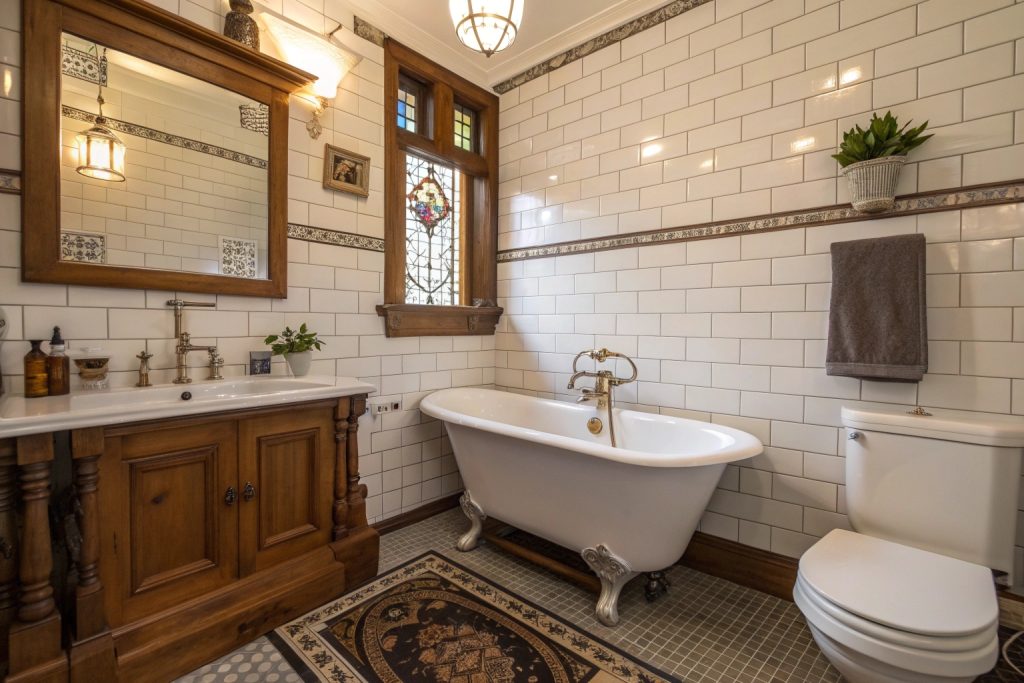
Bathroom with a clawfoot bath, white subway wall tiles and patterned floor tiles

Being eligible doesn't mean approval is guaranteed. It means the work can be considered under this pathway.

When a discretionary permit is needed

A discretionary permit is needed where removing fixtures is likely to damage significant elements. These include the fixtures themselves, walls, doors or windows, floors, cornices, architraves and/or skirtings.

Bathroom with timber wall panelling, a panelled door, a freestanding bath and a timber vanity
Minor works approval Discretionary permit
Removing and/or replacing deteriorated fixtures and fittings that are not historic fabric Removing fixtures is likely to damage significant elements
No damage to significant elements such as walls, floors and skirtings Significant elements include the fixtures themselves, walls, doors or windows, floors, cornices, architraves and/or skirtings

Lodging and timing

For works in the City of Hobart area, you can lodge a minor works approval application online through PlanBuild Tasmania.

There is no statutory timeframe for a minor works approval. A decision within 14 days is usual.

You can read more in Heritage Tasmania's guidance on getting approval for works.

Why you shouldn't skip this step

Carrying out works on a place on the Tasmanian Heritage Register without heritage approval is an offence.

Approval can reach inside the home, too. For Kassa Villas in Glebe, the register datasheet states that heritage approval is required for changes to the fabric of the place, both inside and outside.

If your home is locally listed or in a heritage precinct

This is the situation owners most often find confusing. Two things are true at the same time, so it helps to look at them side by side.

First, the Tasmanian Planning Scheme's exemptions table lists internal building and works as exempt from planning permits.

Second, the City of Hobart says you will usually need planning approval for development if your property is heritage listed or in a heritage precinct. Council also says some maintenance is exempt, but that you should get advice specific to your property.

So the safest step is to check with Council before you finalise your bathroom scope. This matters even more if any part of the work goes beyond the inside of the house.

Confirm with Council for your property. Your listing, your home and your planned work all shape the answer. The City of Hobart can give you advice that is specific to your property before you commit to a scope.

Heritage approval is only one layer

Heritage approval isn't always the only approval a bathroom renovation needs. Heritage Tasmania's Works Guidelines note that some works eligible for a minor works approval may still require further planning, building and/or plumbing approvals. Check what applies to your project before work starts. If you're also updating a laundry, that's a different room with its own questions, and our separate guide to laundry permits covers it.

Planning your bathroom scope around your approval pathway
The order matters. Confirm your listing status first, then shape the scope of your bathroom around the pathway that applies.

If your home is on the Tasmanian Heritage Register, two questions guide the scope. Is each fixture historic fabric? And is removing it likely to damage significant elements? Your answers point you towards a minor works approval or a discretionary permit.

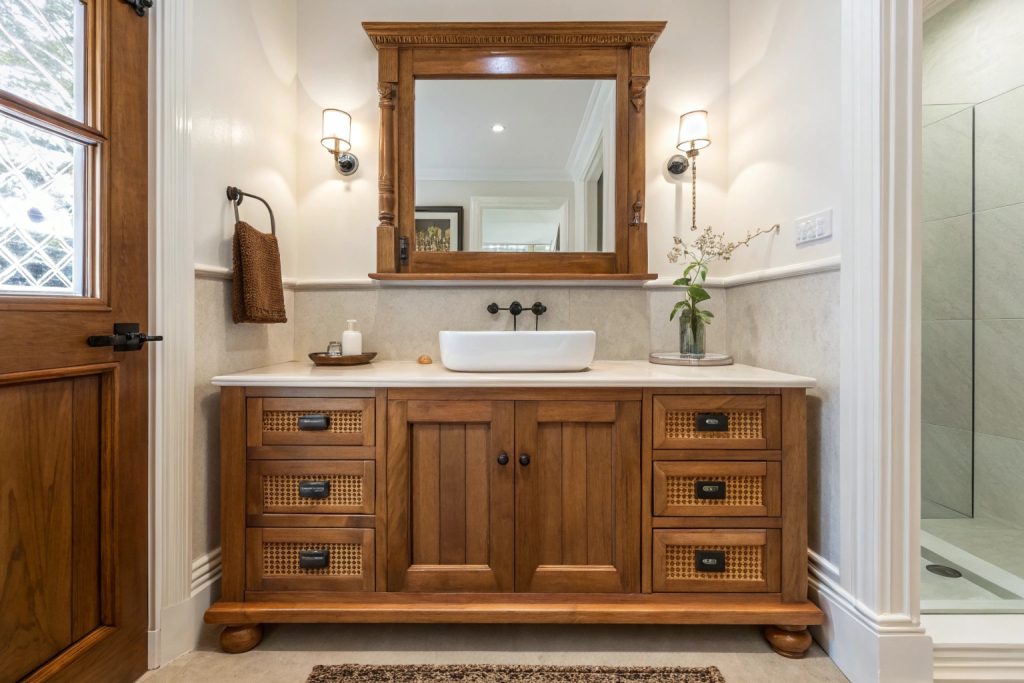
Timber bathroom vanity with a vessel basin, wall-mounted tapware and a framed mirror

Many inner-city homes are also attached to their neighbours. Conjoined cottages share party walls. At Kassa Villas in Glebe, for example, the homes have brick party walls and narrow backyards.

Before you request a quote:

  • I've checked my property's listing status.
  • I've spoken with the City of Hobart or Heritage Tasmania about my property.
  • I've noted the existing fixtures, and whether any might be historic fabric.
  • I know other planning, building and/or plumbing approvals may still apply.

So, do I need heritage approval to renovate my bathroom? Council or Heritage Tasmania will give you the final answer for your property. Once you know where you stand, you're welcome to talk through your bathroom plans with our team. We offer a home consult and a free quote to help you plan the bathroom itself.

Get in touch

GET A FREE QUOTE TODAY

Facebook · Twitter · LinkedIn · Pinterest

Need help? Call our support team 24/7 at (03) 6152 6136

(03) 6152 6136